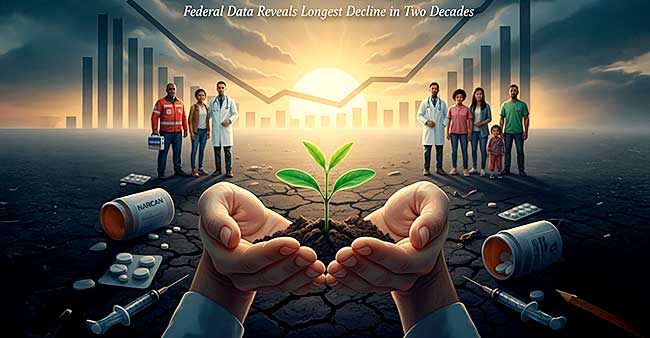
The news came not with a blaring siren, but with the quiet, clinical click of a data release. According to the latest provisional figures from the Centers for Disease Control and Prevention, the unrelenting upward trajectory of overdose deaths in the United States showed a sustained, encouraging dip for much of 2025. After years of heartbreaking graphs that climbed like sheer cliffs, the line finally began to tilt downward.
For those of us who have chronicled this epidemic—who have traced its path from rural pill mills to city streets laced with fentanyl, who have written obituaries for generations—this data point is more than a statistic. It is a fragile, flickering signal in a long, dark night. It is a reason to lean in, to analyze not with unchecked celebration, but with a sober, determined hope. Because while the decline is real, it is not a victory. It is a temporary clearing in a storm that has claimed over a million American lives.
Deconstructing the Descent: What the Numbers Suggest
The CDC’s data indicates the decline was not a one-month anomaly but a trend observed through most of the year. Early analysis points to a confluence of factors, a rare alignment of public health strategies beginning to take hold.
- The Naloxone Surge:After years of grassroots advocacy, the floodgates for the opioid overdose reversal medication naloxone (Narcan) have finally opened. Widespread distribution programs, over-the-counter availability, and saturation in hard-hit communities have transformed this lifesaving tool from a scarce resource carried by EMTs to a common sight in libraries, gas stations, and grandmothers’ handbags. We are, in essence, getting better at catching people as they fall. Each reversal is a death averted, a future still possible.
- Fentanyl Test Strip Normalization:The era of the unknown substance has been mitigated, slightly, by the mass proliferation of fentanyl test strips. Once considered controversial drug paraphernalia, they are now a standard component of harm reduction kits. Users can check their supply, and that moment of knowledge—that simple, color-changing strip—has allowed for more cautious use and informed decisions. It is a pragmatic acknowledgment of the reality of the drug supply, and it is saving lives.
- The MAT Expansion Frontier:Access to Medication-Assisted Treatment (MAT)—using medications like buprenorphine and methadone—has slowly, painfully expanded. The dismantling of the “X-waiver,” which previously restricted who could prescribe buprenorphine, has put this gold-standard treatment in the hands of more primary care doctors in more communities. Telehealth flexibilities, preserved post-pandemic, have also bridged the gap for those in treatment deserts. Recovery is becoming marginally less difficult to access.
- The Community Guardian Effect:A less quantifiable but profoundly powerful force is the rise of community-based harm reduction organizations. Staffed often by people with lived experience, these groups meet individuals where they are—literally and figuratively. They distribute supplies, offer wound care, provide connections to housing and treatment, and, most importantly, reinforce the message: Your life has value.This human buffer against despair and isolation is proving to be a critical layer of defense.
The Shadows Beneath the Numbers: Reasons for Vigilance
To mistake this decline for an end to the crisis would be a catastrophic error. The structural demons that fueled this epidemic remain, largely, unchained.
The Evolving Poison: The illicit drug supply is a shape-shifting adversary. As public health adapts to fentanyl, new threats emerge. Xylazine, a potent veterinary sedative known as “tranq,” has infiltrated the street supply, complicating overdoses by causing severe wounds and resisting reversal by naloxone alone. The decline in 2025 could be overturned overnight by a new, more lethal synthetic cocktail.
The Chasms of Inequity: The overall decline almost certainly masks persistent and devastating disparities. Death rates among Black, Indigenous, and other communities of color have risen at alarming rates in recent years, a legacy of systemic neglect and unequal access to healthcare and harm reduction resources. A national average can hide localized tragedies that continue unabated.
The Treatment Desert Problem: While MAT access has improved, vast swaths of the country remain treatment deserts. Stigma, cost, insurance barriers, and a simple lack of providers mean that for millions, the path to recovery is still a labyrinth with no exit. Furthermore, our treatment infrastructure remains woefully underprepared for the complexity of polysubstance use, which is now the norm, not the exception.
The Wellspring of Pain: We have yet to meaningfully address the deep, societal currents that feed addiction: untreated trauma, economic despair, crumbling social safety nets, and a healthcare system that prioritizes profit over wellness. Until we treat the root causes of pain, we will forever be playing whack-a-mole with its symptoms.
The Path Forward: Holding the Line
This data from 2025 is not a finish line. It is evidence that the immense, heartbreaking work of thousands of advocates, healthcare workers, peers, and families is having an effect. It proves that the strategies of harm reduction, when funded and implemented, work.
Our task now is threefold:
First, we must defend this ground. We must protect the policies that enabled this progress—expanding, not restricting, access to naloxone and test strips; preserving telehealth for MAT; and funding community harm reduction organizations as the essential public health partners they are.
Second, we must deepen our investment. This means moving beyond crisis response to building a true continuum of care: low-barrier access to MAT, integrated mental health services, robust recovery support systems, and housing-first initiatives. We must invest in the science of addiction and recovery.
Third, we must summon the political and moral courage to confront the sources of our national pain. This is the hardest work of all.
The dip in the curve in 2025 is a message in a bottle washed ashore after a decade of shipwrecks. It tells us that rescue is possible. But it also implores us: Do not stop now. The storm is still raging. Bring more boats. For the families who have lost loved ones, this data is a bittersweet validation. For those still struggling, it is a proof of concept—that survival is possible, that a different future can be built, one life, one policy, one strip of naloxone at a time.
The work continues. The vigil is not over. But for the first time in a long time, the dawn feels a little less distant.